
South African learners prove SA can compete with the world’s best young talent
Seven South African high school learners from the Western Cape have made history by helping win the prestigious International Space Settlement Design Competition at the international finals held at NASA’s Kennedy Space Center in Florida.
The achievement is particularly significant because it came on South Africa’s first-ever entry into the competition, with Team ZA selected through the inaugural South Africa Space Design Competition hosted at the University of Cape Town.
As the only African team in the international competition, the South African learners joined students from the United Kingdom, Australia, Brazil, China and the United States – and emerged as part of the winning Rockdonnell team.
For South Africa, the result is more than an impressive achievement in a global space competition. It is a powerful demonstration that the country’s young talent can compete on the international stage when given access to the right opportunities.
The seven South African learners were Zayaan Abdurahman of Mondale High School; Joseph Allderman of Westerford High School; Benjamin Honigwachs of Bishops Diocesan College; Alaya Kaplen and Qayalah Omar of Cannons Creek Independent School; Ethan Schoombee of Fairmont High School; and Dean Weich of Bishops Diocesan College.
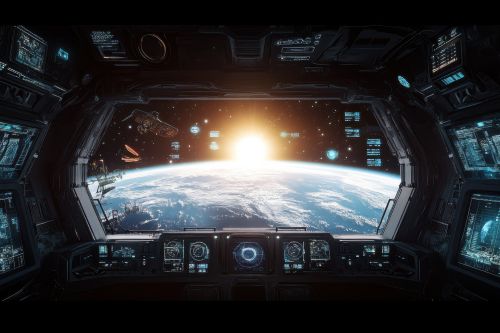
The learners became part of Rockdonnell, the first team in the competition’s history to include representatives from every inhabited continent. Their winning proposal, Hermes, was a futuristic spacecraft designed to transport 3 000 people across the inner Solar System.
The International Space Settlement Design Competition is a multidisciplinary challenge that goes well beyond traditional science and engineering. Learners work in teams to respond to a professional-style request for proposals, developing concepts that require engineering, design, business, leadership, communication and problem-solving skills.
That multidisciplinary approach is important because the competition is not simply looking for future rocket scientists. It gives young people with different talents the opportunity to contribute – from engineering and architecture to business, human factors, presentation and communications.
The South African learners played a number of key roles within the international team. Qayalah Omar served as a presenter, while Benjamin Honigwachs, Joseph Allderman and Ethan Schoombee defended the proposal before the judges.
Allderman also received the Anita Gale Creative Genius Prize, one of only four such awards presented across the competition.
Reflecting on the honour, Allderman said: “Team ZA worked so cohesively together that we all deserved this award. I was just the one who got picked to represent it.”
The achievement was welcomed by the Western Cape Government. Acting Provincial Minister for Education Anton Bredell congratulated the team, saying:
“On behalf of the Western Cape Government, I congratulate these remarkable young South Africans on their achievement. Their success is a powerful reminder that South African learners have the talent, determination and creativity to compete with the very best in the world when they are given the opportunity.”
For Jagger Cooper-Doubell, Chair and Executive Director of the South Africa Space Design Competition, the result highlights something particularly important about South Africa’s future talent pipeline.
“The talent was never missing in South Africa. The opportunity was.”
Cooper-Doubell said the competition provided South African learners with the platform and challenge they needed to test themselves against some of the strongest young talent in the world – and ultimately defeat the world’s best teams on South Africa’s first attempt.
That message has significance well beyond the space sector.
South Africa is already recognised for its capabilities in areas ranging from astronomy and radio astronomy to satellite technology and space science. Developing the next generation of engineers, scientists, entrepreneurs and problem-solvers will be critical if the country is to strengthen its position in the global knowledge economy.
Competitions such as the South Africa Space Design Competition provide a practical way of exposing young people to the type of complex, multidisciplinary challenges they will encounter in the modern economy. They also demonstrate that South African learners can operate alongside their international peers at the highest level.
The success of Team ZA has also created momentum for the competition itself. Following the historic international result, the South Africa Space Design Competition plans to expand nationally, with regional events scheduled for the Western Cape and KwaZulu-Natal in 2027 and ambitions to ultimately reach all nine provinces.
Entries for the 2027 South African season are expected to open later this year.
For a country seeking to expand its participation in the global economy, the message from Florida is an encouraging one: South Africa has the talent to compete globally. The challenge is to create more opportunities for that talent to prove it.