
SOEW Calls for Urgent ITAC Intervention as DTIC Halts Crackdown on Substandard Cable Imports, Threatening Local Jobs and Safety
Local cable manufacturing industry asks why were they not consulted
South Ocean Electric Wire (SOEW), the JSE-listed manufacturer of compliant low-voltage electrical cables, has expressed deep concern over the South African Bureau of Standards (SABS) decision to halt its programme aimed at restricting substandard imports.
This follows directives from the Department of Trade, Industry and Competition (DTIC), influenced by feedback from the World Trade Organisation (WTO) and the Embassy of the People’s Republic of China. Critically, the local cable manufacturing industry, including established South African producers like SOEW, were neither consulted nor considered in this decision-making process.
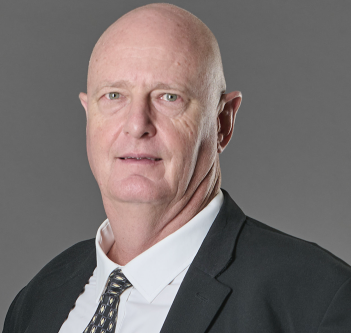
“Local manufacturers like SOEW, which employ hundreds of South Africans and uphold rigorous SABS and SANS standards, face unfair competition from dumped, inferior, non-compliant low-voltage wires and cables flooding the market,” said Andre Smith, CEO of SOEW. “These imports undermine safety, jobs and the broader electrical infrastructure critical to South Africa’s energy transition, mining, industrial and residential sectors.”
He noted: “It is particularly troubling that non-South African entities such as the WTO and the Chinese Embassy appear to exert influence over South Africa’s domestic regulatory decisions that should prioritise the safety of South African citizens and the viability of local industry.
“South Africa has the sovereign right to protect its consumers and manufacturers from substandard goods that pose real risks of overheating, insulation failure, fires and electrical hazards. Yet the voices of local manufacturers, who understand the ground realities of production in South Africa, were sidelined.”
Unlevel Playing Field: Subsidised Imports vs Local Realities
The halted Pre-Export Verification of Conformity (PVOC) programme was intended to ensure that products meet identified South African National Standards (SANS) or equivalent, with Certificates of Conformity issued before export. Enforcement would involve the Border Management Agency and SARS, coordinating with Chinese authorities like the China Certification and Inspection Group.
“However, low-voltage electric wire and cable, products central to household, renewable energy tie-ins, mining and industrial applications, are notably absent from clear, enforceable protections,” Smith added. “Doubts remain about effective monitoring and verification of imported goods once they reach South African borders. How can we trust that these imports will be properly monitored when the programme itself has been suspended?”
Smith continued: “Even if imported cables were to fully comply with local standards, which many do not, South African manufacturers cannot compete on a level playing field. Electricity and labour are the two major cost drivers in cable manufacturing. Benchmarking clearly shows that China holds a massive advantage in both areas. On top of this, Chinese companies exporting to South Africa benefit from substantial government subsidies. The anti-dumping duties that are imposed are simply not enough to offset these advantages.”
“Local electricity and labour rates are significantly higher, and additional logistics costs further erode our competitiveness,” Smith emphasised. “We invest heavily in local testing laboratories, SANAS-accredited facilities and compliance with compulsory specifications under the National Regulator for Compulsory Specifications (NRCS). Yet we are forced to compete against heavily subsidised grey imports that often use inferior materials such as Copper-Clad Aluminium (CCA), inadequate insulation, and non-compliant conductors, which fail basic safety tests.”
ITAC’s Apparent Absence Raises Serious Questions
He noted that the International Trade Administration Commission (ITAC), mandated to investigate and recommend anti-dumping measures to protect the Southern African Customs Union (SACU) industry from injurious dumped imports, appears to have had no meaningful input in this decision. Despite repeated requests from SOEW and other local manufacturers for investigations into the dumping of low-voltage cables, ITAC has provided no substantive response or action to date.
“This raises critical questions about whether ITAC is being overridden or sidelined,” said Smith. “ITAC has successfully recommended anti-dumping duties in sectors like steel and tyre manufacturing to protect local jobs and industry. Why is the cable sector, vital for Eskom, municipalities, renewables, mining and construction, not receiving similar urgent attention? Local manufacturers are losing tenders, shedding jobs, and seeing revenue decline while substandard and subsidised imports proliferate.”
“SOEW’s in-house laboratory regularly tests imports against compliant local products. Results consistently show that the vast majority of grey market cables cannot match the quality, durability, and safety of SABS-compliant South African products. Failures manifest during commissioning, shortly after energisation, or over time, leading to downtime, costly repairs, invalid Certificates of Compliance (COCs), rejected insurance claims and risks when selling properties.”
Broader Impacts on Safety, Jobs, and the Economy
“The influx of non-compliant and subsidised cables exacerbates existing challenges, including copper theft syndicates that force rushed replacements with cheap imports, perpetuating a vicious cycle of failures and outages,” Smith explained. “This threatens South Africa’s grid optimisation efforts, renewable energy integration and industrial recovery. Local production supports employment not only at SOEW but across the entire value chain, including PVC producers, drum manufacturers, steel wire suppliers, and more.”
Smith emphasised: “South Africa’s cable industry has the capacity, expertise and commitment to support grid reliability, reconductoring and clean energy goals. But we can only do so if adequately protected from dumping and unfair subsidised competition. Prioritising quality, locally manufactured, tested solutions ensures safer installations, lower long-term costs, local job creation and true sustainability.”
“We urge the DTIC, ITAC, NRCS, SARS and government to reinstate robust protections, properly consult the local industry, respond to our repeated calls, and enforce compliance at source and at the borders. The future of South African manufacturing, jobs and electrical safety depends on decisive action.”
“SOEW calls on all stakeholders including utilities, contractors, electricians, mining operators and policymakers to demand transparency and decisive action. Purchasing from reputable local manufacturers, backed by strong guarantees and proven testing, is the safest and most sustainable path forward,” Smith concluded.





A strong reminder that protecting local manufacturing is about far more than business—it’s about safety, quality, jobs, and South Africa’s long-term economic sustainability. Local manufacturers deserve a fair and level playing field. 🇿🇦
It is so good to see businesses standing up and calling for action on industrial policy. “Tariffs” have been something which have been very topical and are so often framed as being punitive rather than a tool to contribute to strong industrial policy