

China – The Dragon that rewards strategy
Author: Jacquelene Coetzer
At the South Africa Trade Desk, we are passionate about working with entrepreneurs looking to access new markets. This article is part of a series of market entry advisory pieces looking at how South African businesses can engage with our major trading partners.
China: Africa’s most strategic, high-potential trade partner represents one of the most significant frontiers for African exporters today. As Western markets become more protectionist and cost-intensive, China is expanding its global partnerships – with Africa being a top priority.
The Chinese government’s “Dual Circulation Strategy” encourages greater imports, diversified sourcing, and high-value foreign products, creating a rare window for African companies ready to enter with strategy and cultural intelligence.
China–Africa trade exceeded $280bn in 2024, making China Africa’s largest trading partner for 15 consecutive years
This creates a powerful opportunity for African exporters across:
❖ Natural ingredients & botanicals ❖ Beauty & wellness
❖ Cocoa, coffee, speciality teas ❖ Fashion & artisanal goods
❖ Medical devices & diagnostics ❖ Agro-processing & speciality foods
❖ Industrial minerals & raw materials
But success in China depends not on speed — but on respect, compliance, relationships, long-term vision, and strategy
For African exporters, China is often seen as intimidating or inaccessible — yet for those who enter correctly, it can become one of the most loyal and scalable markets in the world.
Understand the market context
➢ China is not just a massive market — it is a highly structured, policy-driven economy with intricate policy incentives, provincial trade zones, and tightly managed access
➢ The country is a global consumer and strategic importer of natural resources, wellness products, African foods, precious minerals, medical devices, fashion, and cosmetics
➢ Entering China means thinking beyond volume — and planning for regulation, cultural alignment, and smart partnerships
➢ Largest African expat community in Asia, estimated to be around 500,000, many of them are centred in Shenzhen & Guangzhou
Cultural sensitivity is non-negotiable
➢ In China, business is not closed on price — it’s built on trust, patience, and reputation
➢ Concepts like “Guanxi” (relationships) and “Mianzi” (saving face) govern everything
➢ Build long-term relationships
➢ Show humility, consistency, and professionalism
➢ Understand Chinese preferences in colour, symbolism, health, and status
➢ English is not widely used outside of Tier 1 cities — translation, localisation, and communication support are essential
➢ Red & Gold are very important colours for the Chinese and symbolise many things, such as good luck, success, and more – Avoid Black & White, as these colours are usually associated with death – This is very important in branding & packaging, but also when giving gifts ➢ The number “4” (four) should be avoided at all costs, as the Chinese character for 4 is similar to the character for death
Pro Tip: Learning a few basic Chinese (Mandarin) phrases or pronouncing someone’s name correctly can go a long way in showing respect Accepting a business card in the correct way is very important – Accept it with both hands, look at it for a second or two, place it in front of you on the table during the meeting – maybe even comment on the person’s title or their area of expertise / responsibility
Market Entry Compliance Checklist
To enter the Chinese market, you may require:
➢ CFDA/NMPA registration (for medical devices, supplements, cosmetics)
➢ CIQ clearance for food and agricultural products
➢ Customs clearance via HS codes & VAT/Import duties
➢ Chinese-language packaging (ingredients, batch, expiry)
➢ Local registration agent or importer of record
➢ Product trademark registration in China, not just internationally – this is crucial to protect your intellectual property
Pro Tip: Grey-market imports are common — but dangerous. Always enter legally and transparently to protect your IP and scale potential
Common market entry models in China
➢ Distributor-led entry (most common for first-time exporters)
➢ Importer of record + e-commerce flagship store
➢ OEM / ODM partnerships (especially for cosmetics & FMCG)
➢ Joint venture (ONLY after proof of demand) – In China, a JV should never be the starting point. It should be the result of demonstrated demand
➢ Cross-border e-commerce (CBEC) as a test route
Pro Tip: Successful exporters almost always begin with a pilot market, limited SKU range, and controlled distribution before national rollout
What counts as proof of demand in China?
Any one (or a combination) of the following:
Actual Sales (Best Proof)
- Consistent repeat orders from a distributor or importer
- Sales through CBEC platforms (Tmall Global, JD Worldwide, etc.)
- Sell-through data showing products moving, not just listed
This shows real consumer pull, not just interest
Pilot or Trial Results
- A successful pilot in 1–2 provinces or cities
- Limited SKU rollout with measurable uptake
- Strong reorder rates within 3–6 months
This proves the product fits local preferences and pricing
Distributor Competition
- More than one serious Chinese distributor wanting exclusivity
- Distributors willing to:
▪ invest in marketing
▪ pre-order stock
▪ co-fund localisation
When Chinese partners compete, demand is real
Price Acceptance
- Customers buy at your intended price point
- No pressure to heavily discount to move stock
This validates your positioning (premium vs mass)
Regulatory Investment by the Partner
- A Chinese partner is willing to:
▪ pay for registration
▪ fund compliance testing
▪ invest in local packaging & labelling
This shows confidence in market demand
Inbound Interest (Not Pitches)
- You receive inbound enquiries from:
▪ buyers
▪ platforms
▪ regional distributors
Demand is pulling you in — you’re not pushing
Price & Positioning Strategy
China has:
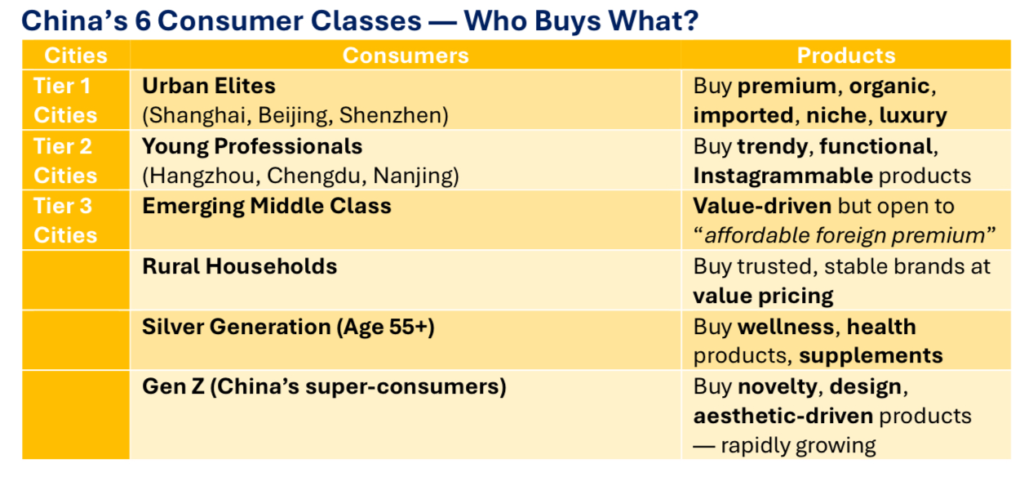
➢ Sophisticated urban consumers – wanting the best & latest in international products
➢ Deeply rural buyers who are brand loyal but price sensitive
➢ E-commerce platforms like Tmall, JD.com, Xiaohongshu, Taobao, & WeChat ministores dominating retail
➢ Social media influencers could be instrumental
Your pricing must include:
- Local logistics, taxes & tariffs
- Platform commissions (15–30% typical for e-commerce)
- Agent/distributor cut
- Local marketing spend
- Shelf positioning
Be Ready to Invest in Branding & Trust
You need more than a good product – You need:
❖ A Chinese-language marketing plan
❖ Partnerships with local KOLs (influencers)
❖ Social media presence across WeChat, Weibo, Douyin, Taobao
❖ QR codes for traceability and legitimacy
❖ Willingness to run sampling, seeding, or bundled promos
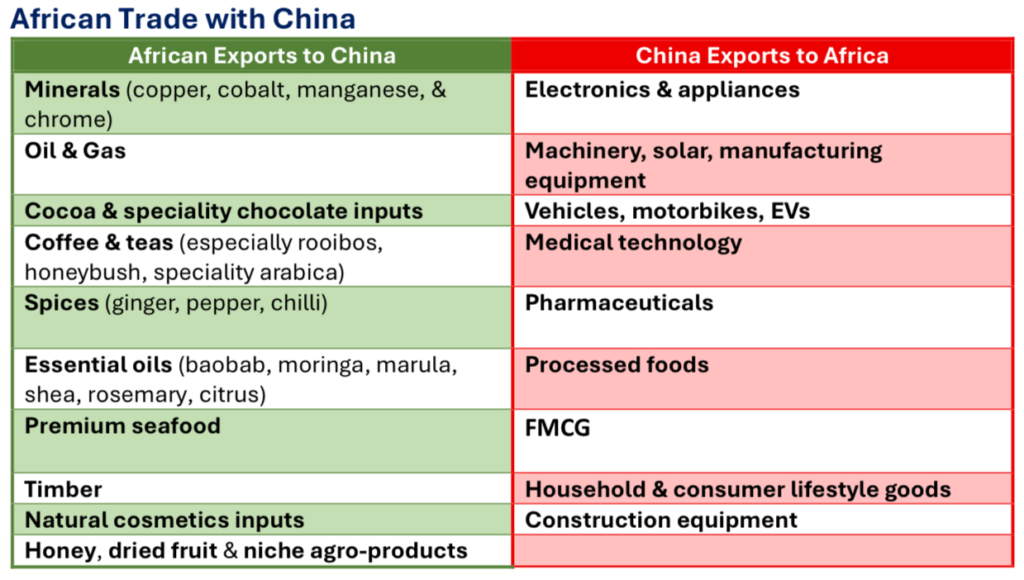
Strategic Opportunities for African Business
➢ China is moving from “Made in China” to “Made WITH Africa” — deeper cooperation.
➢ Massive demand for African natural ingredients in Chinese skincare & wellness.
➢ Premium foods & beverages are booming among upwardly mobile Chinese consumers.
➢ Chinese companies increasingly want joint ventures in Africa for processing & sourcing.
➢ Many African exporters succeed not by selling finished products directly to Chinese consumers, but by supplying high-quality inputs into China’s vast manufacturing, wellness, and processing ecosystems.
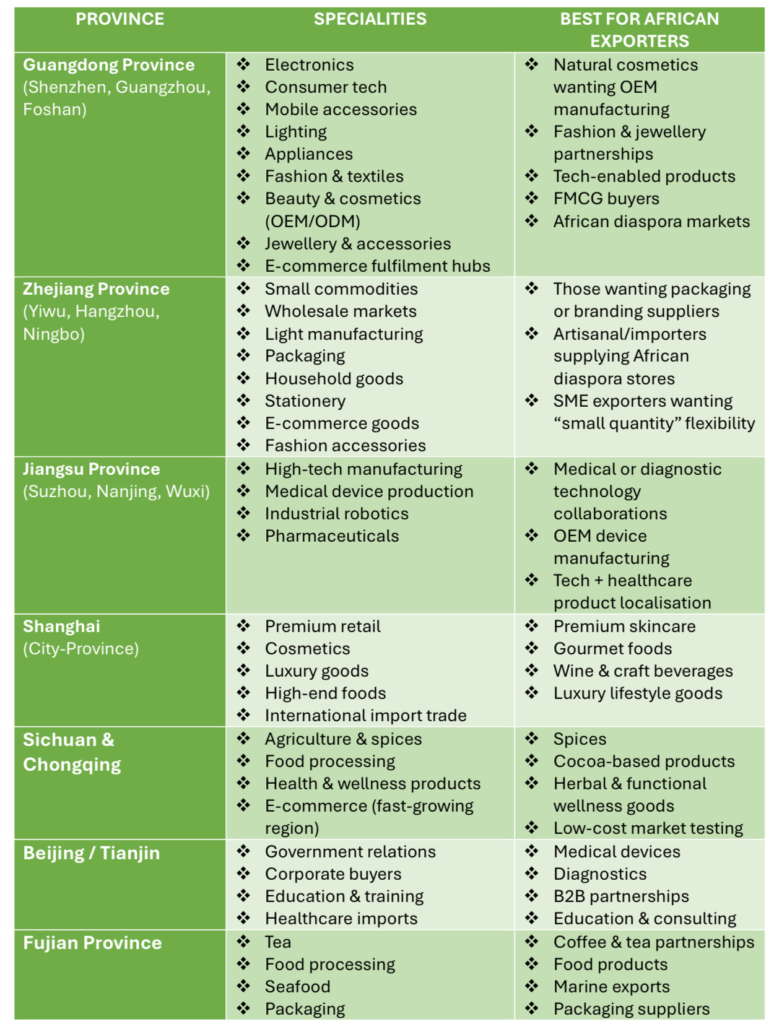
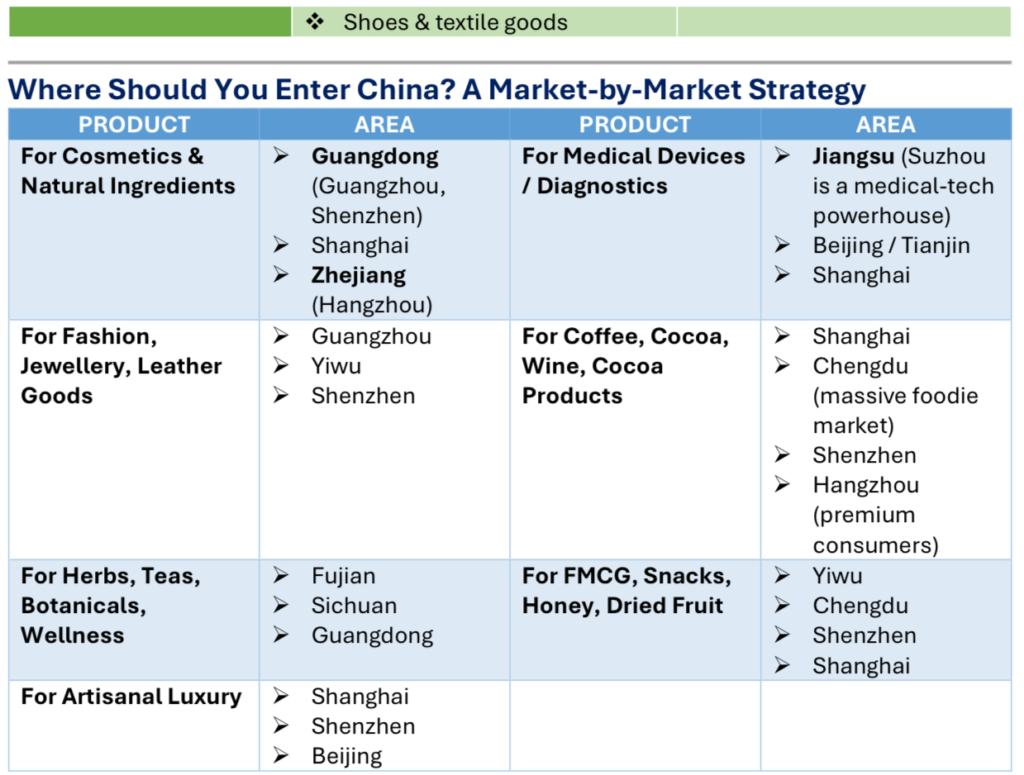
What is manufactured where in China? A practical guide for African importers
China is not one market — it is a manufacturing ecosystem of specialised provinces. Understanding this helps you choose partners, build supply chains, and target buyers strategically.
China’s Digital Channels: What to use and when
Make use of influencers to promote your products – not all of them are that expensive – it is important though to find the right one
Brand presence, customer service, QR codes, mini-stores.
Brand awareness + trending topics.
- Douyin (TikTok China)
Short video selling, influencers, storytelling.
- Xiaohongshu (RED)
Premium skincare, cosmetics, teas, fashion.
- Tmall / JD.com
Flagship stores for established brands.
- Taobao
Good for testing lower-cost products
Strategic Insights — China rewards those who play the long game
❖ Never pitch for fast sales — Chinese partners distrust “urgent sellers”
❖ Relationship-first, contract-second
❖ Localisation = survival
❖ Packaging & quality must be world-class
❖ Most deals require several months of trust-building
❖ Compliance MUST be perfect — Chinese regulators do not bend
❖ Once trust is secured, China is extremely loyal
Common Mistakes to Avoid
- Assuming Western success or strategies will replicate in China
- Relying on one agent for national distribution
- Using generic packaging without local testing
- Failing to protect your IP in China
- Entering without translation, localisation, or cultural advice
Final Thoughts
China rewards commitment, patience, and precision. Enter with respect for its systems, culture, and consumers, and you won’t just sell — you’ll build enduring partnerships. Enter unprepared, and even exceptional products will struggle to gain traction.
About the author
At Jacqueléne Global Consulting, we help companies translate ambition into action — guiding you through market research, compliance, partnerships, and strategy so you can enter new markets with confidence and strategically.