
Africa’s Future in Motion: How Trade, Energy, and AI Could Transform a Continent by 2035
In a future imagined by Boston Consulting Group managing director and partner Tolu Oyekan, the Africa of 2035 looks radically different from the continent today. Pan-African trade, he suggests, could surge from roughly $200 billion to $2 trillion, propelled by the full realization of the African Continental Free Trade Area (AfCFTA) and a long-awaited breakthrough in reliable electricity.
This vision formed the backbone of a recent conversation on Imagine This…, hosted by journalist Patricia Sabga, with contributions from the program’s AI co-host, GENE. The discussion explored how trade, energy, technology, and policy could intersect to reshape Africa’s economic trajectory over the next decade.
A Free Trade Deal Comes Alive
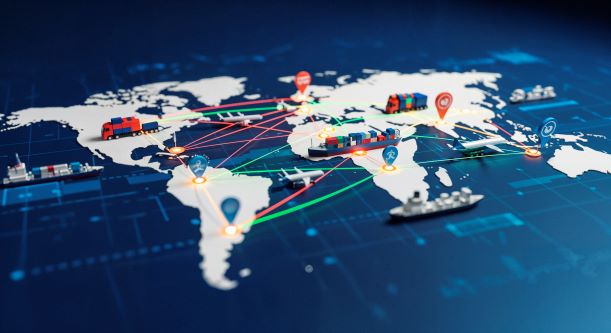
AfCFTA, the world’s largest free trade bloc by membership, is already beginning to shift the economic landscape. Today, less than 20% of African trade occurs within the continent, a pattern Oyekan argues diverts away jobs, value creation, and development opportunities. Raw materials frequently leave Africa unprocessed, only to return as higher-priced finished goods.
But in the scenario he envisions, AfCFTA matures into a fully functional single market. Early signs of progress are already emerging. Digital border-clearance systems, for example, have cut crossing times between Kenya and Uganda from days down to hours, boosting truck traffic and cross-border commerce.
What AfCFTA seeks to do is give Africa agency, Trading with itself, deciding its own path, and increasing its bargaining power in a multipolar world.
Energy: The Missing Piece – Finally in Reach
Despite its vast potential, Africa has long struggled with unreliable electricity. Roughly half the continent’s population remains off the grid. Oyekan believes that could change within a decade, clearing a major stumbling block to industrialization, digital growth, and modern supply chains.
Unlocking this future, however, requires two parallel efforts: making existing installed capacity actually usable and attracting the investment needed to modernize and expand infrastructure.
In countries like Nigeria, he noted, only about one-sixth of installed generation capacity ultimately reaches paying customers. Aging transmission systems lose power before it ever reaches homes or businesses, while non–cost-reflective tariffs discourage private investment.
Still, examples of rapid progress exist. Egypt added 20,000 megawatts of electrical capacity in under a decade—roughly equivalent to Nigeria’s entire current system. “It’s not impossible,” Oyekan stated. “We have examples of it.”
He also pointed to a growing pool of African capital—particularly expanding pension funds—that could be deployed domestically rather than relying solely on foreign direct investment.
A Leapfrog Moment
Reliable electricity is more than a convenience in Oyekan’s imagined 2035—it’s the platform for a wave of innovation shaped by Africa’s unique constraints and opportunities. From drone logistics to high-speed payments to AI-enabled trade systems, the continent could bypass legacy infrastructure altogether.
GENE, the program’s AI co-host, described a future where African-built AI systems automate customs procedures, power local-language voice assistants, and turn smartphones into borderless trading hubs.
Oyekan agrees. African entrepreneurs, he said, already excel at innovating “around constraints.” With adequate power, they could build even more.
In this future, critical minerals mined in East or Central Africa might be refined and transformed into battery components in South Africa, leveraging regional industrial strengths that have long operated in isolation. And with advances in drone technology, physical gaps in highway and rail networks may matter less.
Risks and Realities
Still, the path forward is not guaranteed. GENE offered a blunt list of risks: policy reversals, tariff freezes, shaky utilities, currency volatility, and supply-chain vulnerabilities.
Oyekan acknowledged those dangers but did not yield to the negativity. “Doing nothing is the unrealistic option,” he said. With more than 600 million people lacking electricity and millions more entering the workforce each year, the cost of stagnation is high.
A No-Regret Move for Today
Asked how African governments and CEOs—both on the continent and abroad—can prepare for this imagined 2035, Oyekan’s answer was straightforward: power and connect Africa now.
That means investing in energy interconnections, scaling digital payment systems like the Pan-African Payment and Settlement System (PAPSS), and using AfCFTA to strengthen commercial ties across borders. “Everything else builds on top of that,” he said.
In the vision Oyekan outlines, the next decade could be Africa’s most transformative yet—if leaders seize the opportunity. And as Imagine This… hints, the continent’s innovators are ready. The question now is whether policy, investment, and political will can keep pace with Africa’s imagination.
For a deeper dive into Africa’s emerging trade and energy landscape, listen to the full “Imagine This…” interview with Tolu Oyekan: