
Black ownership should be dropped from the B-BBEE scorecard
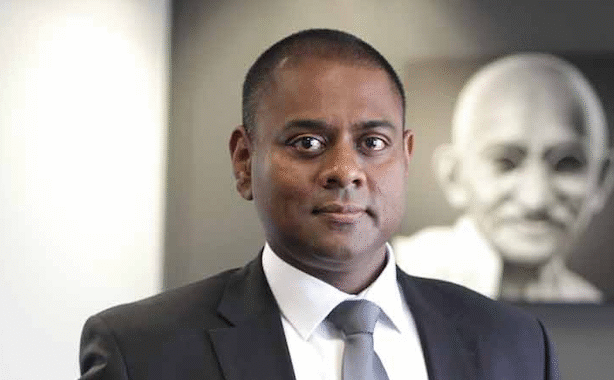
Author: Suran Moodley, Managing Executive at Ariston Global
As a “black-owned” business and a firm which advises on B-BBEE strategies, this could be viewed as one of the most controversial statements that could be made in the current fractious environment where B-BBEE is generating significant attention. We think it is a topic which needs to be robustly debated.
Perhaps for some additional context, we are a black-owned business which was founded in Durban in 2007, Without blowing our own horn, we would like to think we are an example of an entrepreneurial success story.
Let’s scratch a little bit deeper. Our business was founded by our Group CEO in 2007 and for 7 years he invested time, energy and financial resources building up a business. In 2014, I came in as a partner and brought some additional capital, skills and business relationships.
It is through this lens that we look at the discussion around black ownership and its inclusion in the B-BBEE scorecard.
Starlink is the obvious talking point at the moment with the debate around the “30% ownership” versus the Equity Equivalent Investment Programme (EEIP) being proposed by the current Minister of Communications and Digital Technologies, Solly Malatsi.
For a moment let’s park aside the question of the incumbents and focus purely on a new business entering the market. When we entered our strategic collaboration as a business, we knew what skills, financial resources and relationships each party would bring. Starlink is world-class technology, backed by significant financial capital and technical expertise. What will this 30% partner be introducing?
Business partners don’t engage for B-BBEE points. There needs to be a mutual benefit and synergy.
If we look at the two major incumbents in the sector, you have 2 businesses – MTN and Vodacom – with market capitalisations of around R300bn each. If we combine these 2 “30%” ** stakes, we get roughly R180bn of black ownership – not an insignificant value.
If we consider that Telkom has a market capitalisation of around R28bn, that means that the licensing arrangements, and associated stakes, for the two largest telcos in South Africa have created the equivalent of 6 and a half Telkoms.
With R180bn and the equivalent of 6 new telcos in the country, we should have one of the most advanced telco ecosystems. Starlink should be a welcome new technology enabler and at the end of the day, it would be hard to argue that the likes of MTN, Vodacom and Telkom wouldn’t be thinking about re-seller or strategic partnerships with the Starlink technology.
If we look beyond the telco sector for a moment, there is another consideration.
According to the South African Revenue Services (SARS) there were 959 000 VAT registered businesses in 2024 but only 488 118 were active. While this may sound like a vibrant SME ecosystem, by our calculations 75% of Corporate Income Tax is paid by roughly 1000 businesses.
On that ratio, it is unlikely that the broad-based ownership approach is actually seeing any meaningful flow of dividends to shareholders. If the ownership element of the scorecard was dropped and there was a focus on true transformation initiatives through Management Control (with Salary parity), Procurement and Enterprise and Supplier Development initiatives, you would get far better results than this stubborn focus on ownership.
We believe the minister is correct in his focus on the Equity Equivalent Investment Programme (EEIP) approach. At a practical level, Starlink says it can connect 5000 schools and provide them with high-speed internet access. There can be no question that this will spur greater economic development than trying to enforce ownership which will benefit a handful of investors.
5 000 schools with an average of 500 students would mean that 2.5m young South Africans would be connected to the internet with access to information. If we look at research, a 10% increase in access to internet in emerging markets has the ability to add between 0.8% and 2.5% to a country’s Gross Domestic Product. South Africa is a R7 trillion Rand economy… even a 0.5% boost will be true broad-based empowerment.
South African policymakers expend a lot of energy talking about wanting to create black industrialists or black entrepreneurs, but until they have walked in the shoes of an entrepreneur, it is very difficult to truly appreciate the very personal relationship a business owner has with their equity.
In many ways, the ownership element has been positioned as extractive – show me the dividends. This messaging is being echoed by concerted efforts to drive Employee Share Ownership Plans (ESOPs).
When we started our business back in 2007, we had to navigate the good and the bad – it couldn’t just be about how much money we could take out. Will passive shareholders or employees have the appetite to fund cashflow shortfalls or expansion finance?
Unlikely.
Economic Empowerment started with a focus solely on ownership. It later evolved into the Broad-Based version we have become accustomed to. Is it not time for further evolution whereby ownership is not a barrier to the other benefits B-BBEE has to offer? For us it is time to start taking a long, hard look at the ownership element on the scorecard and whether it is achieving its intended goal.
** These stakes are actually closer 36% but there is some fluctuation of trade on the JSE.
About the author:
Suran Moodley is the Group Managing Executive at Ariston Global. With over 25 years of experience across multiple business disciplines, he is a seasoned strategist and solutions architect, specialising in workforce development, organisational transformation and innovation strategy. He is passionate about empowering South African entrepreneurs. As a trusted advisor and leader, Suran has successfully guided start-ups, turnarounds, and mature businesses both locally and internationally.