
World Bank releases Africa Pulse report
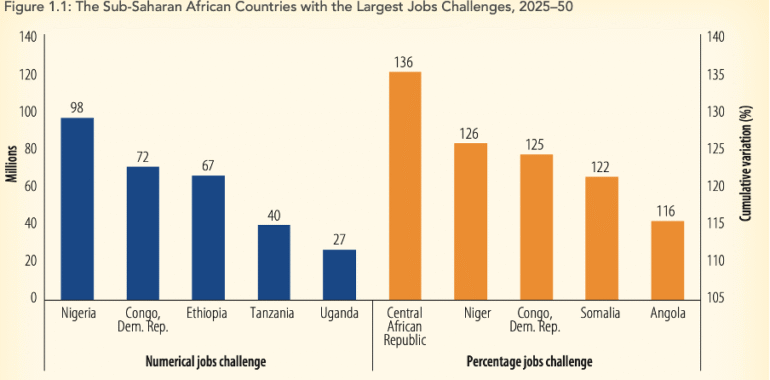
Over the next quarter century, Sub-Saharan Africa’s working-age population will grow by more than 600 million – the challenge will be matching this growing population with better jobs, given that only 24% of new workers today land wage-paying jobs. A structural shift toward more medium and large firms is essential to generate wage jobs at scale.
This was a key insight from the recently released Africa Pulse – the World Bank’s biannual economic update for the region.
Sub-Saharan Africa’s huge jobs challenge cannot be solved with the current growth model. The region is undergoing the largest and fastest demographic shift in the world and in recent history. Between 2025 and 2050, the region’s working-age population is projected to expand more rapidly than in any other developing region, adding more than 620 million people to its labour force – representing more than three-quarters of the net increase across all emerging markets and developing economies. This is occurring at a time when the region is grappling with multiple headwinds, including conflict, climate change, and weak fiscal positions.
While there has been much focus around the US and its trade relations with the African continent, the World Bank notes:
“Due to their relatively low trade exposure to the United States, Sub-Saharan African countries are well-positioned to weather the impact of higher US tariffs. Nevertheless, uncertainty around the implementation and duration of current trade measures remains elevated. This lingering uncertainty, coupled with subdued global investor appetite and a tightening supply of external finance, could constrain growth prospects. Elevated risk of debt distress across many countries in the region leaves them vulnerable to external shocks, limiting their ability to respond effectively to global economic disruptions.”
With this very real challenge, the World Bank identifies a couple of key drivers to unlock employment growth noting: “Large-scale job creation in the region will occur when reductions in the cost of doing business enable existing enterprises to scale and attract new high-growth firms to enter the market. Achieving this requires addressing foundational constraints to private sector development through policies that: (1) improve the provision of essential infrastructure and workforce skills, (2) foster a more conducive business environment, and (3) strengthen the capacity of states and institutions.”
The report outlines a set of policy priorities to help countries stimulate large-scale job creation. Reducing the cost of doing business is critical to enable businesses to expand and new high growth firms to enter the market. Policies that target the provision of better infrastructure – energy, digital, transport – and human capital and skills development are essential for creating an ecosystem for people and businesses to thrive. Strengthening institutions and governance can ensure stability, curb corruption, and create a predictable business environment that attracts private sector investment.
Stimulating private sector development in sectors such as agribusiness, mining, tourism, healthcare, and housing and construction will also be key. For example, for every job created in tourism, an additional 1.5 jobs are generated in related sectors. With the right reforms and investments, Sub-Saharan Africa can unlock its vast employment potential and chart a path toward inclusive and sustainable growth.
European regulations to weigh on African trade
While exposure to the US trade discussions may be limited, the World Bank report highlights risks from other key partners including Europe noting:
“On the European front, new regulatory measures, such as the Carbon Border Adjustment Mechanism and the EU Deforestation Regulation, impose stringent compliance requirements on exporters of cement, metals, and agricultural products. These non-tariff barriers, coupled with the global shift toward “friendshoring” in strategic industries, risk marginalizing African suppliers unless regional value chains are deepened and standards harmonized under the African Continental Free Trade Area”
It also highlights that: Prolonged geopolitical tensions in the Middle East and/or Ukraine could disrupt supply chains and shipping routes. For Sub-Saharan Africa, the resulting longer routes and higher freight and insurance costs increase the delivered prices of exports, delay critical imports like fertilizer and machinery, and tighten working capital for firms, with knock-on effects on production costs, food prices, and logistics performance.”
Access the full report online here for more insights around AfCFTA, sub-Saharan trade and other opportunities.