
EEIPs are catching the attention of foreign investors
Author: Marc Ashton
While there are still a lot of concerns around the proposed amendments to the B-BBEE legislation in South Africa, Equity Equivalent Investment Programmes (EEIPs) are catching the attention of multinationals considering investment in South Africa who previously saw the complex legislation as a roadblock to investment.
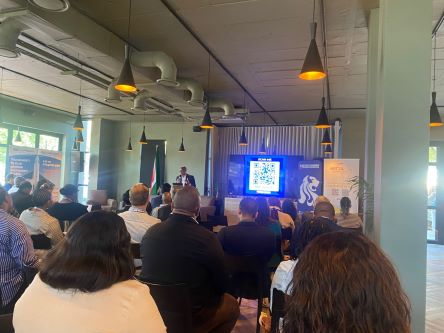
This was one of the key takeaways from an event organised by consulting firm BEE Novation, Xpat Network and the British Chamber of Business in South Africa in Bryanston on Monday.
The event – which included a presentation from Tshediso Matona, Commissioner of the B-BBEE Commission – saw transformation executives and B-BBEE consultants come together to discuss challenges and opportunities within the proposed amendments.
Here are some of our insights from the event:
The good
While the subject of B-BBEE has always been particularly emotive, tensions have ratcheted up over the last 12 months as the ANC has seen declining electoral support and tough questions are being asked about the efficacy of the policies. This has been compounded by pressure from the US and debates around the application of B-BBEE around Starlink into South Africa.
Despite these challenges, the overarching mood from the audience was largely positive and collaborative.
A theme which did come through quite strongly on the positive side was the interest in Equity EEIPs. The ownership pillar has historically been a challenge for foreign investment into the country, but stakeholders at the event indicated that there was real interest when EEIPs were tabled. This provided an alternative lens around which investment into South Africa could be made.
How does an Equity Equivalent Investment Programme (EEIP) work in practice?
In the context of South Africa’s Broad-Based Black Economic Empowerment (B-BBEE) framework, an Equity Equivalent Investment Programme (EEIP) is a strategic alternative for multinational companies that have global policies preventing them from selling equity to local partners.
Instead of transferring traditional shares (ownership), the multinational invests an equivalent value into critical sectors of the South African economy.
Under the B-BBEE Codes of Good Practice, the “Ownership” pillar is usually non-negotiable. However, the EEIP allows a multinational to earn these ownership points by funding programmes that align with national priorities.
For a programme to be approved by the Department of Trade, Industry and Competition (the DTIC), it must meet specific criteria:
- Investment Value: The contribution must be equal to 25% of the value of the South African operations or 4% of annual turnover (depending on the specific sector code).
- Targeted Impact: The funds are typically directed toward Enterprise and Supplier Development (ESD), research and development, or critical skills training for Black South Africans.
- Duration: These programmes generally run for a fixed period, often 10 years, with a structured “milestone” plan for fund disbursement.
Examples of multinationals operating EEIP’s in South Africa include Microsoft, Google, Dell, JP Morgan and Amazon.
The challenging
While there was appetite for investment via EEIP’s there were clear concerns around proposed amendments to the Preferential Procurement element on the scorecard. Historically a business was considered “black-owned” if its black ownership was greater than 51% – proposed amendments to the legislation would require a focus on suppliers who are 100% black-owned or even more specifically 100% black-women owned.
While these proposed changes may be admirable at face value, a number of businesses indicated that this became increasingly onerous as a requirement – particularly for multinationals whose procurement is managed through global supply chains.
With limited local manufacturing capacity, certain representatives indicated that this move could potentially backfire with multinationals simply opting to import more.
A second interesting area of contention which came up during the presentation was concerns around verification methodologies and the cost of compliance for B-BBEE initiatives in South Africa.
There are just under 100 B-BBEE verification agencies in South Africa – these are audited by the South African National Accreditation System (SANAS) – and they are responsible for issuing your annual B-BBEE certificate. A concern that was raised related to the inconsistency of standards being applied by verification agencies and with rising costs of compliance, B-BBEE consultants and transformation executives were unsure of the rules they were expected to follow.
In turn, this subject of verification is also a challenge with the proposed introduction of the Transformation Fund – businesses want to know if their contributions will simply be “fire and forget” with no sight of how their ESD contributions are deployed if they go through a centralised fund model.
The stick
A particular area of concern – particularly when it came to multinationals who were unable to comply with the procurement requirements – was the linking of import / export certificates to B-BBEE compliance.
Businesses felt this could potentially put them in an impossible position if they were forced to commit to local procurement which wasn’t part of their value chain.
The problematic
While there was an overarching sense of collaborative engagement, a question raised by a transformation executive at a multinational business highlighted a critical issue – lack of clarity around timing and the lack of alignment between specialist sector codes.
The scenario that this executive was facing is multi-faceted:
- They operate in a sector which has a dedicated sector code but with the proposed amendments, the sector codes do not align. If they fall back on the generic codes, they are not sure what they are aiming at in terms of spend or investment
- This issue is compounded by no real clear indication of whether there will be a grace or “phasing in” period for the new B-BBEE legislation
- They have a licensing requirement which is predicated on achieving a certain B-BBEE level
This lack of clarity has made it incredibly difficult for the executive to plan their B-BBEE strategy for 2026 and brings enormous risk to the business from both a financial and license to operate perspective.
While the event was definitely collaborative in nature and there was clear intent for policy-makers and the public sector to find each other, the devil is in the detail and it still feels that this may be sorely lacking. Marc Ashton is the CEO of consulting firm Decusatio